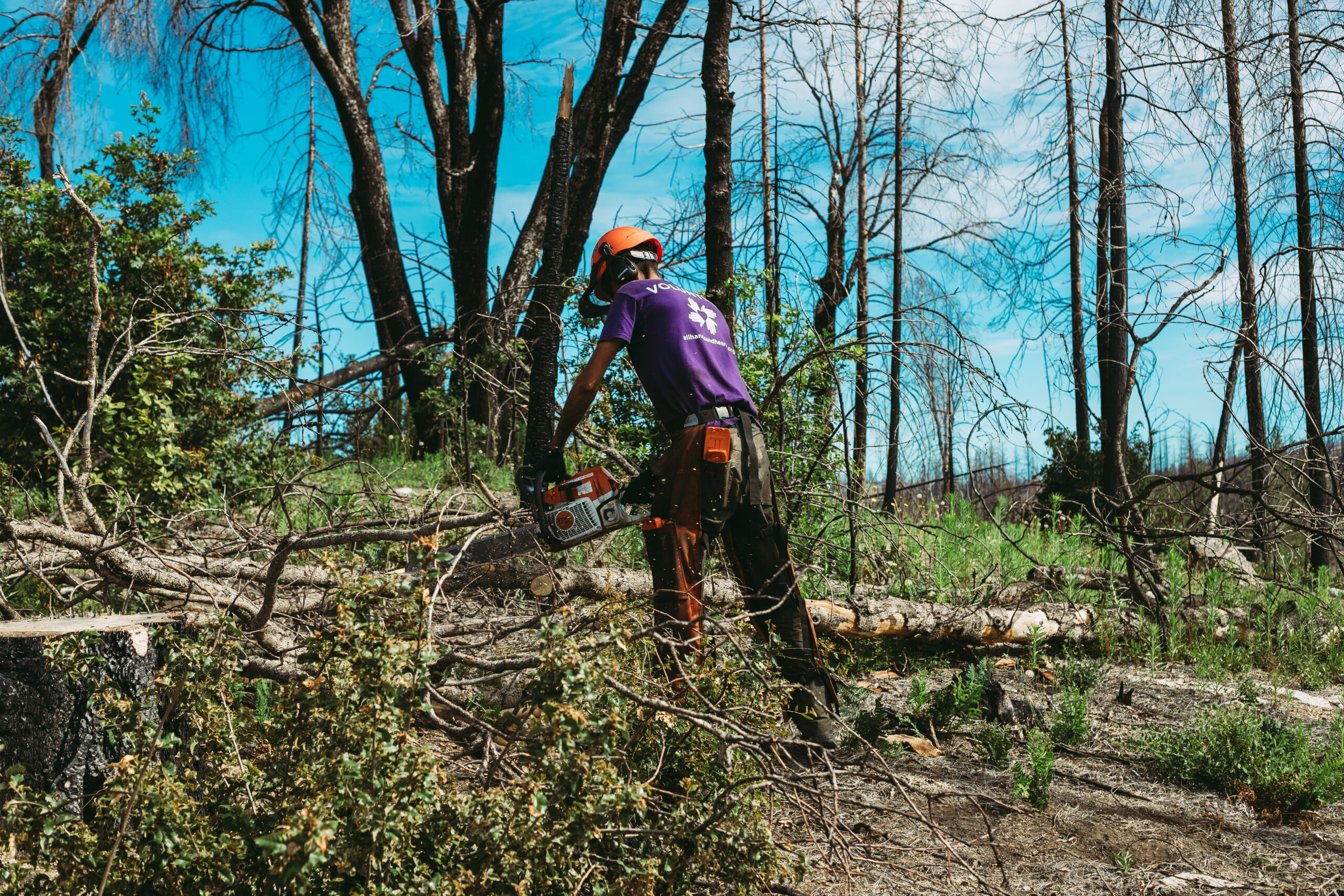
For generations, wildfire was treated as something to eliminate completely. While well-intentioned, over 100 years of fire suppression changed the natural balance of forests. Without periodic low-intensity burns to clear underbrush and dead vegetation, forests became overcrowded with fuel.
At the same time, climate change has intensified conditions on the ground. Warmer temperatures, prolonged drought, and shifting weather patterns have weakened forests across the West and beyond. Stressed trees become more vulnerable to disease and invasive pests, including bark beetles, which have killed millions of trees in recent years.
On top of this, more families are living in the Wildland-Urban Interface (WUI): the areas where homes and communities meet natural wildland. In these spaces, a single wildfire can move rapidly from forest to neighborhood in a matter of hours.
Dead and dying forests increase wildfire risk for entire communities.
While these challenges are growing, so are the ways communities can prepare. Wildfire resilience does not come from one solution alone, but from layers of protection working together.
Defensible Space
One of the most important ways to protect a structure from wildfire is by creating defensible space – the buffer between a home and the vegetation surrounding it.
This space helps slow or stop the spread of wildfire while reducing the risk of ignition from direct flames, radiant heat, or airborne embers. It also provides firefighters with a safer area to work when defending homes during an active fire.
In many wildfire-prone communities, defensible space work includes:
- Clearing dead vegetation and debris
- Trimming trees and overgrown brush
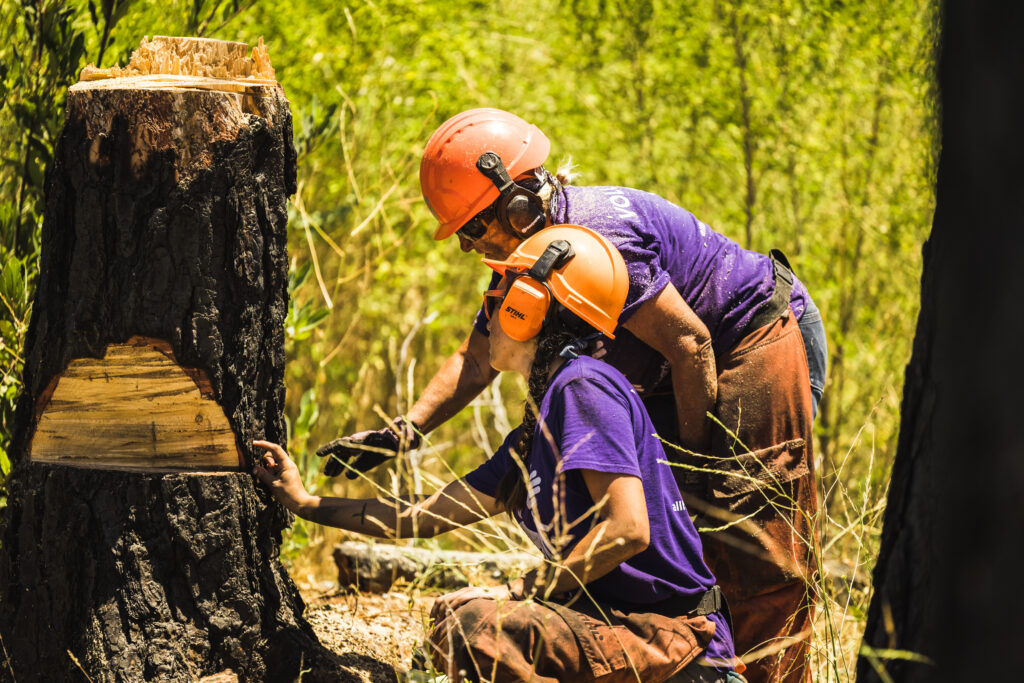
- Removing hazardous or fire-damaged trees
- Creating safer perimeters around homes and structures
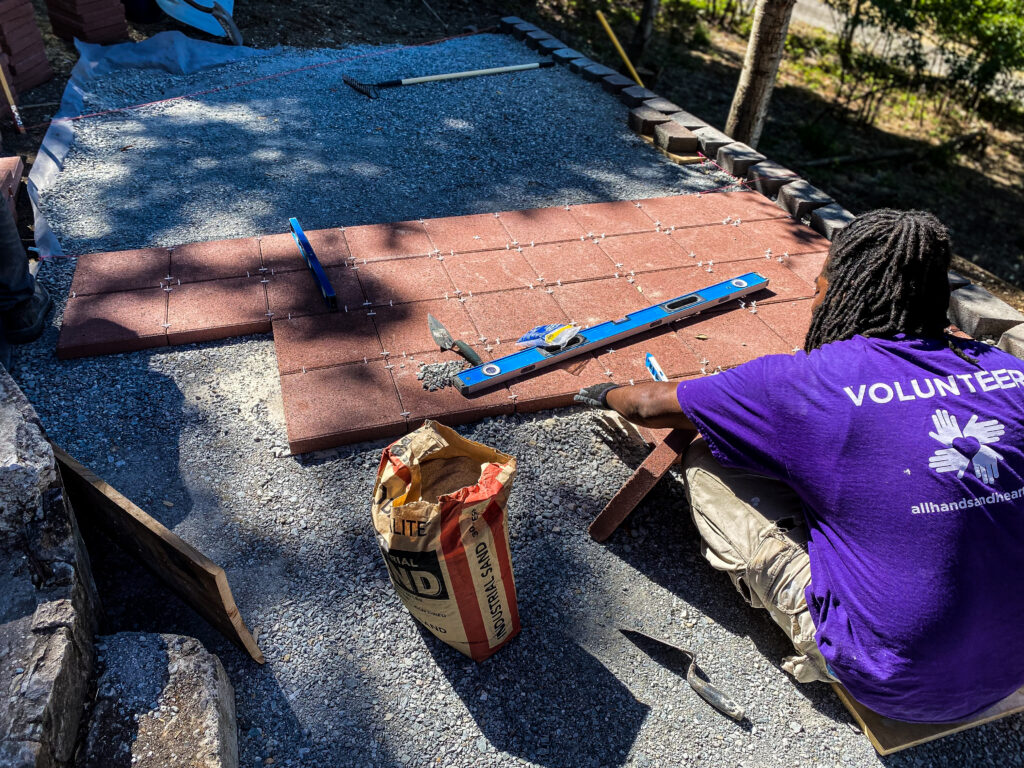
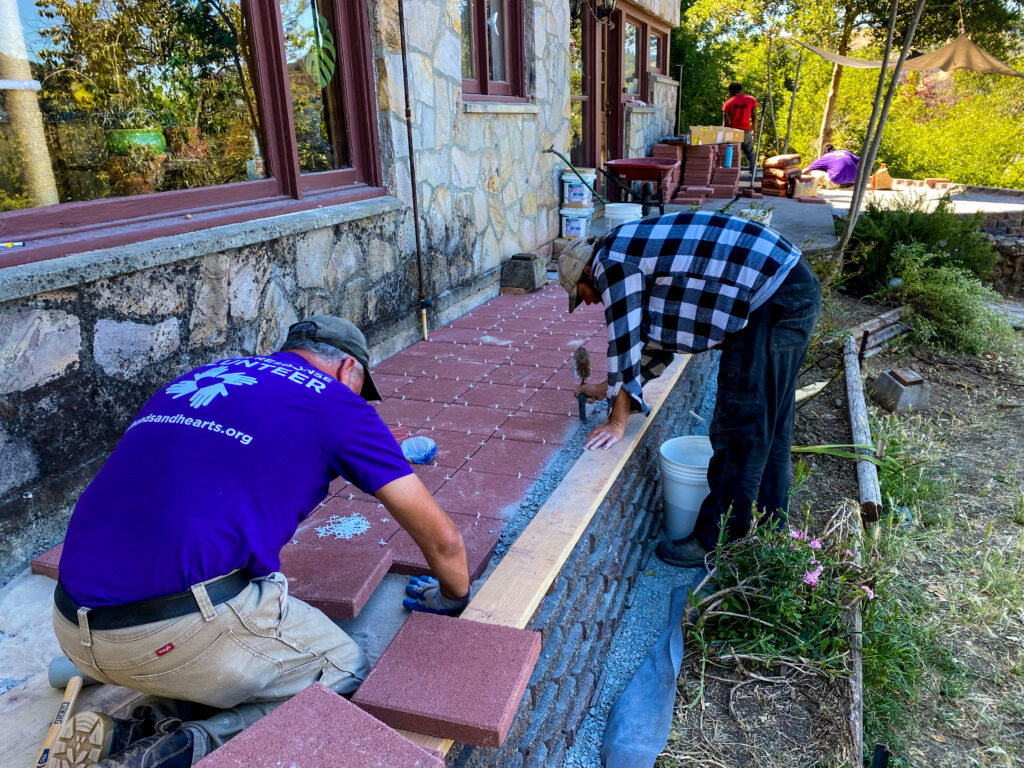
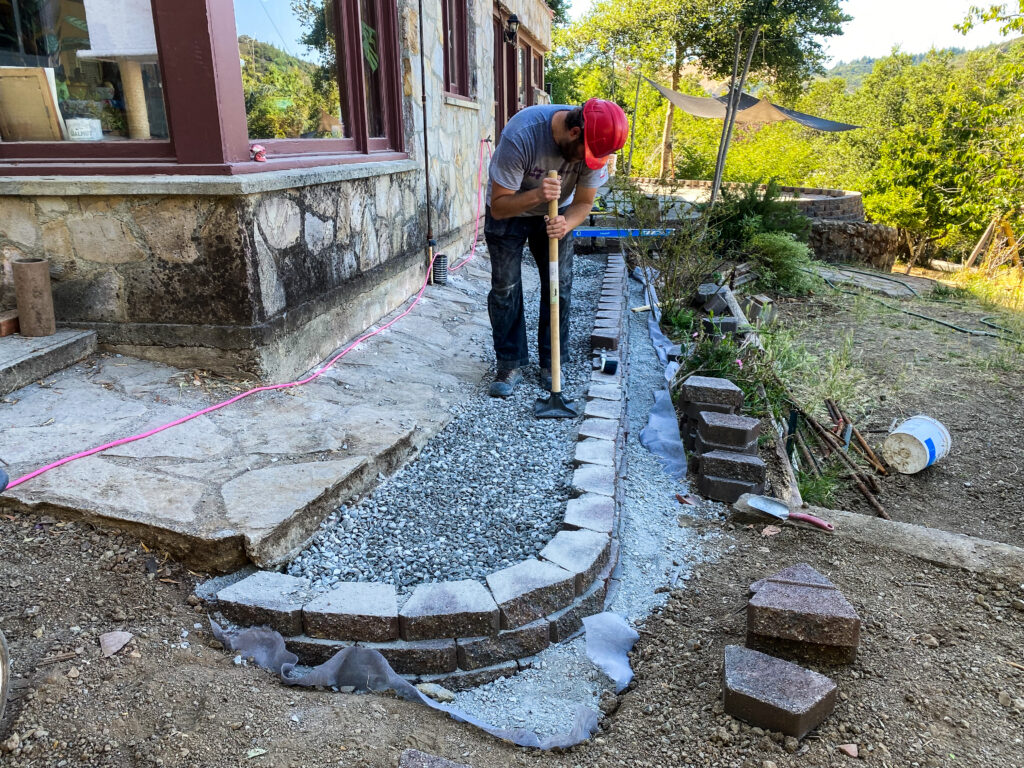
- Replacing highly flammable materials near homes with gravel or noncombustible surfaces
The first five feet surrounding a home is one of the most critical zones to maintain. Even small changes in this area can dramatically improve a home’s chances of surviving a wildfire.
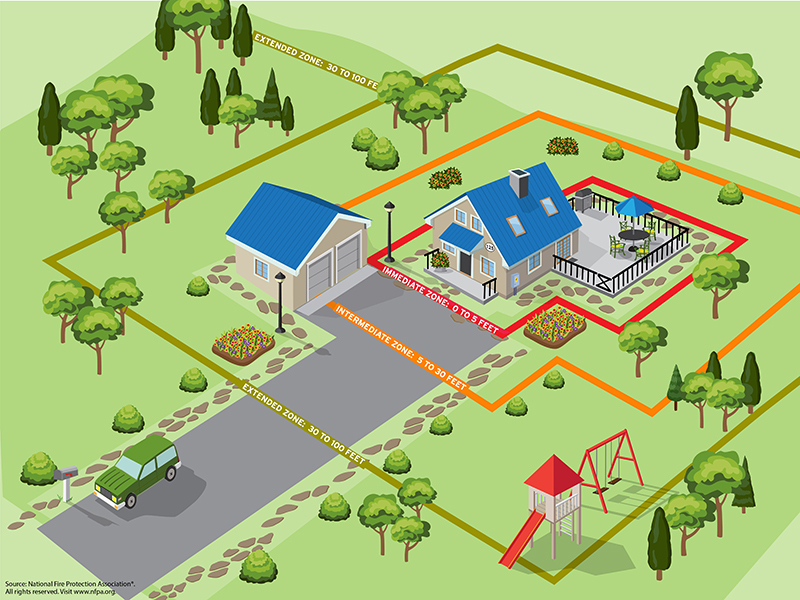
Here are basic rules to create a defensible space around your home:
IMMEDIATE ZONE (0-5 ft from home)
- Use hardscape and noncombustible mulch materials
- Remove all dead and dying vegetation; Check your roofs, gutters, decks, porches, stairways, etc.
- Remove all branches within 10 feet of any chimney or stovepipe outlet
- Limit plants in this area to low growing, nonwoody, properly watered, and maintained plants
- Limit combustible furniture & items on top of decks; Relocate firewood
- Replace combustible fencing, gates, and arbors attached to the home with noncombustible alternatives
INTERMEDIATE ZONE (5-30 ft from home)
- Remove all dead vegetation and dry leaves & pine needles
- Remove branches that hang over your roof
- Trim trees regularly to keep branches a minimum of 10 feet from other trees
- Relocate wood piles
- Remove or prune flammable plants and shrubs near windows
- Remove vegetation and items that could catch fire from around and under decks, balconies and stairs
- Create a separation between trees, shrubs and items that could catch fire, such as patio furniture, wood piles, swing sets, etc.
EXTENDED ZONE (30-100 ft from home)
- Cut or mow annual grass down to a maximum height of 4 inches
- Create space between shrubs and trees
- Remove most fallen leaves, needles, twigs, bark, cones, and small branches
- All exposed wood piles must have a minimum of 10 feet of clearance, down to bare mineral soil, in all directions
Defensible space also strengthens communities as a whole. The more homes that reduce surrounding fuel, the harder it becomes for fire to spread rapidly from property to property.
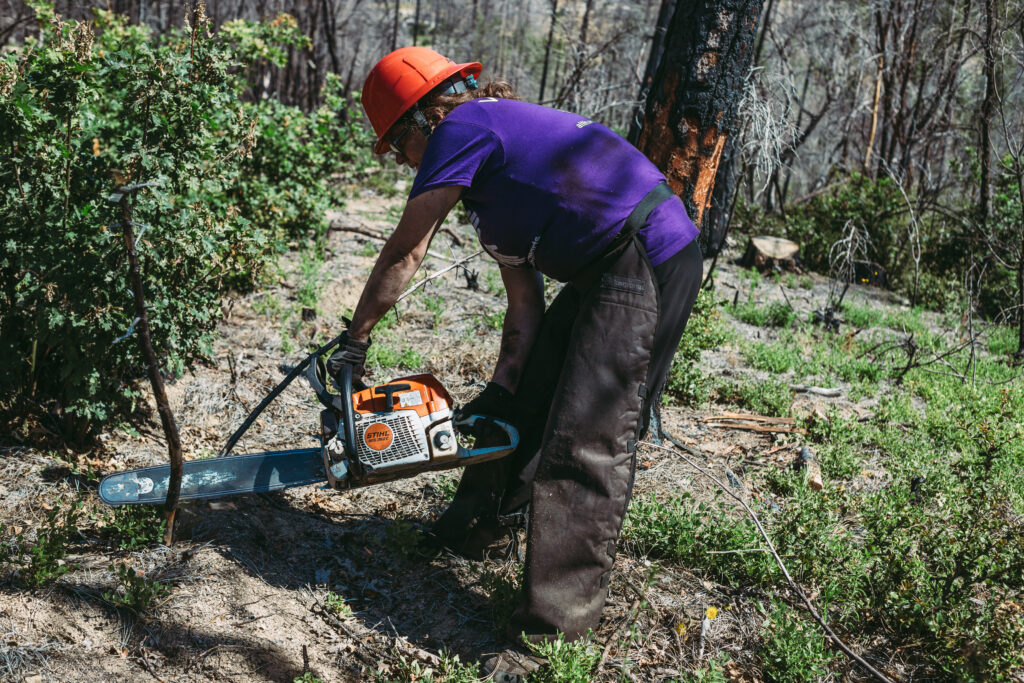
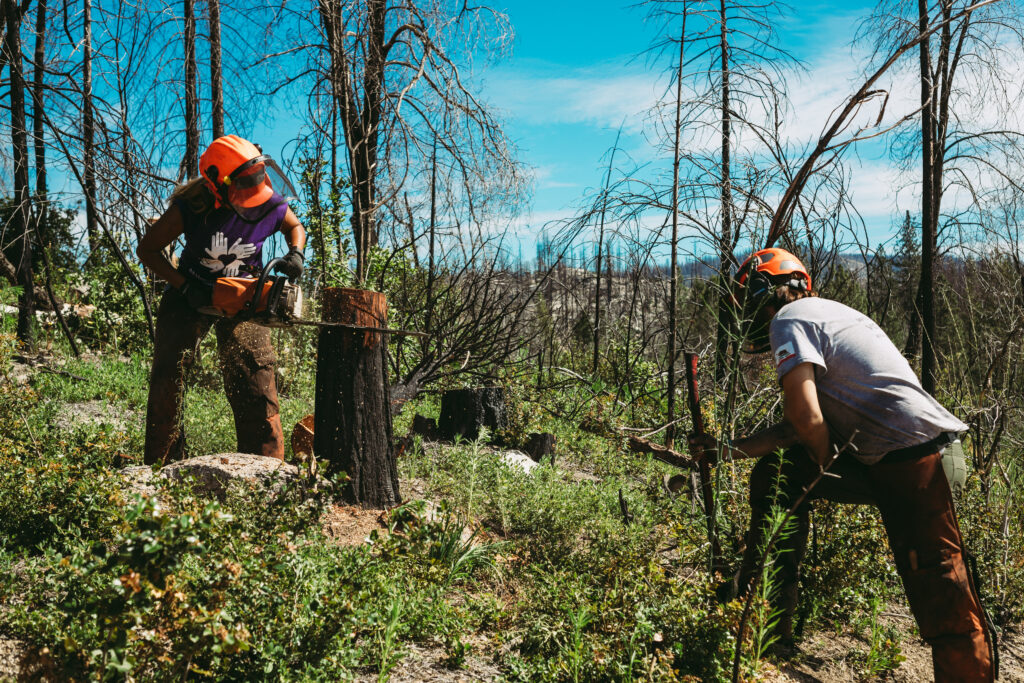
For many families recovering after wildfires, this work also brings peace of mind. Removing damaged trees and lingering hazards can restore a sense of safety and help communities begin rebuilding without the constant reminder of destruction outside their windows.
Fire-Resistant Landscaping
Landscaping plays a major role in how wildfire behaves around a home. Certain plants ignite easily and allow fire to spread quickly, while others retain moisture and are less likely to burn under high heat. Fire-resistant landscaping focuses on creating outdoor spaces that are both beautiful and safer during wildfire season.
Many fire-resistant plants are:
- High-moisture or drought-tolerant
- Low-growing ground cover
- Low in sap, resin, or oil content
- Native to the local environment
- Beneficial to pollinators and wildlife
Examples include succulents, cacti, yarrow, yucca, saltbush, and other native species adapted to dry climates.
Thoughtful landscaping can help slow the movement of fire while reducing the amount of fuel surrounding a home. Combined with defensible space, it creates an additional layer of protection that supports long-term wildfire resilience.
Healthy landscapes also contribute to healthier forests and ecosystems overall. As climate change and drought continue stressing forests across the country, proactive land stewardship becomes increasingly important for protecting both people and the environment.
Home Hardening
Even when flames never reach a neighborhood, homes can still ignite from airborne embers carried miles ahead of a wildfire. That’s why wildfire preparedness doesn’t stop at the edge of the property. Home hardening focuses on strengthening the structure itself against ember intrusion and ignition.
Older homes are often especially vulnerable due to flammable building materials, exposed vents, gaps, roofs, or debris buildup like dry leaves in gutters.
Home hardening may include:
- Installing ember-resistant vents with protective mesh
- Sealing gaps or openings where embers could enter
- Removing vegetation or debris touching the home
- Replacing highly flammable materials when possible
- Maintaining roofs, gutters, and exterior surfaces
These improvements help prevent embers from entering the home and igniting it from the inside, one of the leading causes of home loss during wildfires.
The impact of home hardening extends beyond individual houses. When multiple homes within a neighborhood are protected, entire communities become more resilient. In some cases, hardened homes can even help slow fire spread by acting as barriers between vulnerable structures.
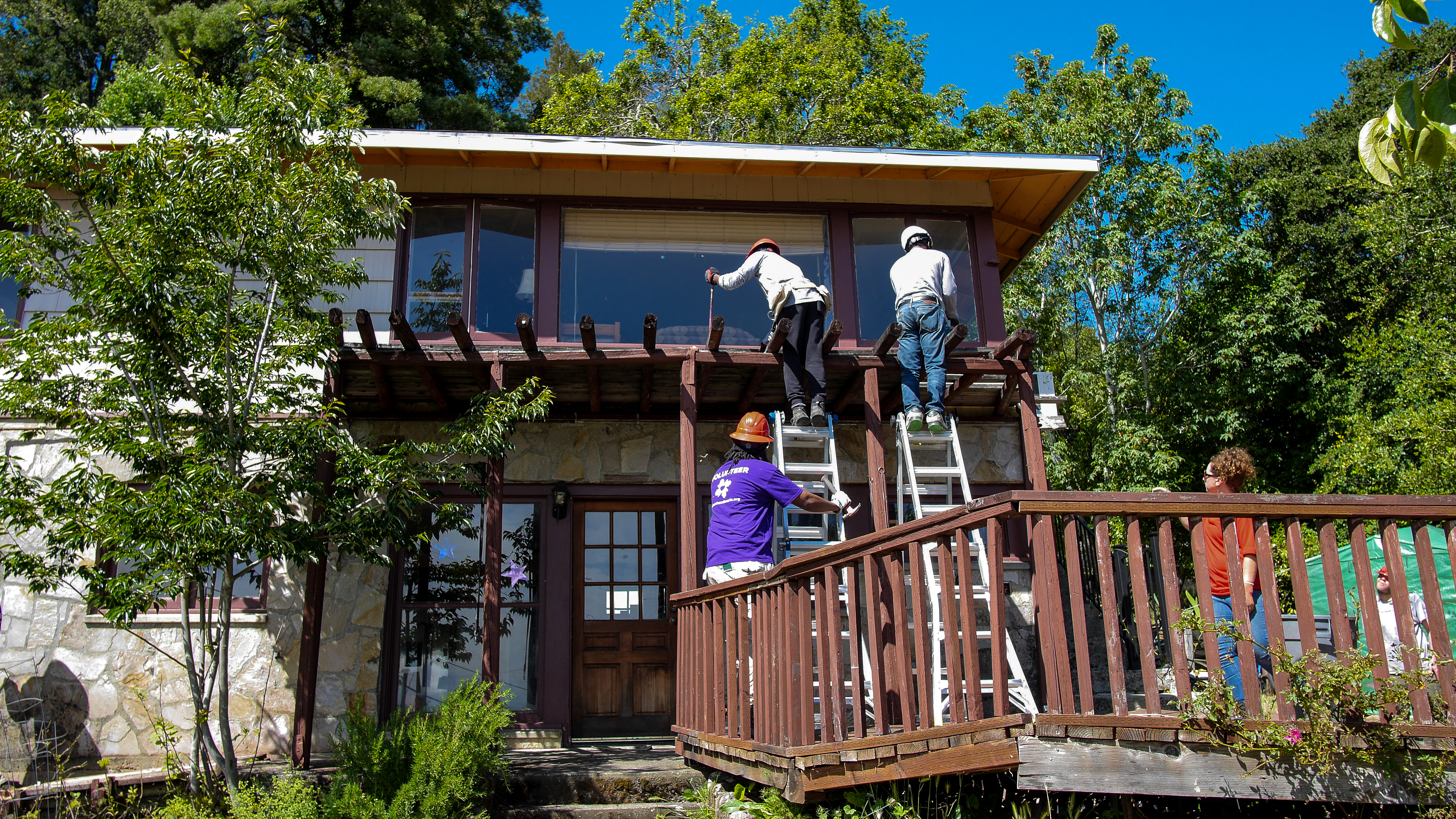
Wildfire preparedness is ultimately a shared effort. From forests and landscapes to neighborhoods and homes, every layer of protection matters.
As wildfires continue to intensify across the country, defensible space, fire-resistant landscaping, and home hardening offer practical, proven ways for communities to prepare to survive wildfire season and to build safer futures long before the next fire begins.