Raqqa Governorate & Rural Damascus
Syria Crisis Relief
Program Start: September 2026
Reliable access to safe drinking water and functional schools are crucial. In Syria, families have spent years navigating the impacts of conflict. We are partnering with local organization Elaf for Relief and Development (Elaf RD) to rehabilitate damaged water systems and restore a local secondary school, prioritizing WASH and electrical restoration to ensure a functional learning environment.
Recent Updates
Disaster Profile
Impact of Conflict on Local Water Access
Years of crisis in Syria have damaged basic public services, leaving rural communities without reliable drinking water.
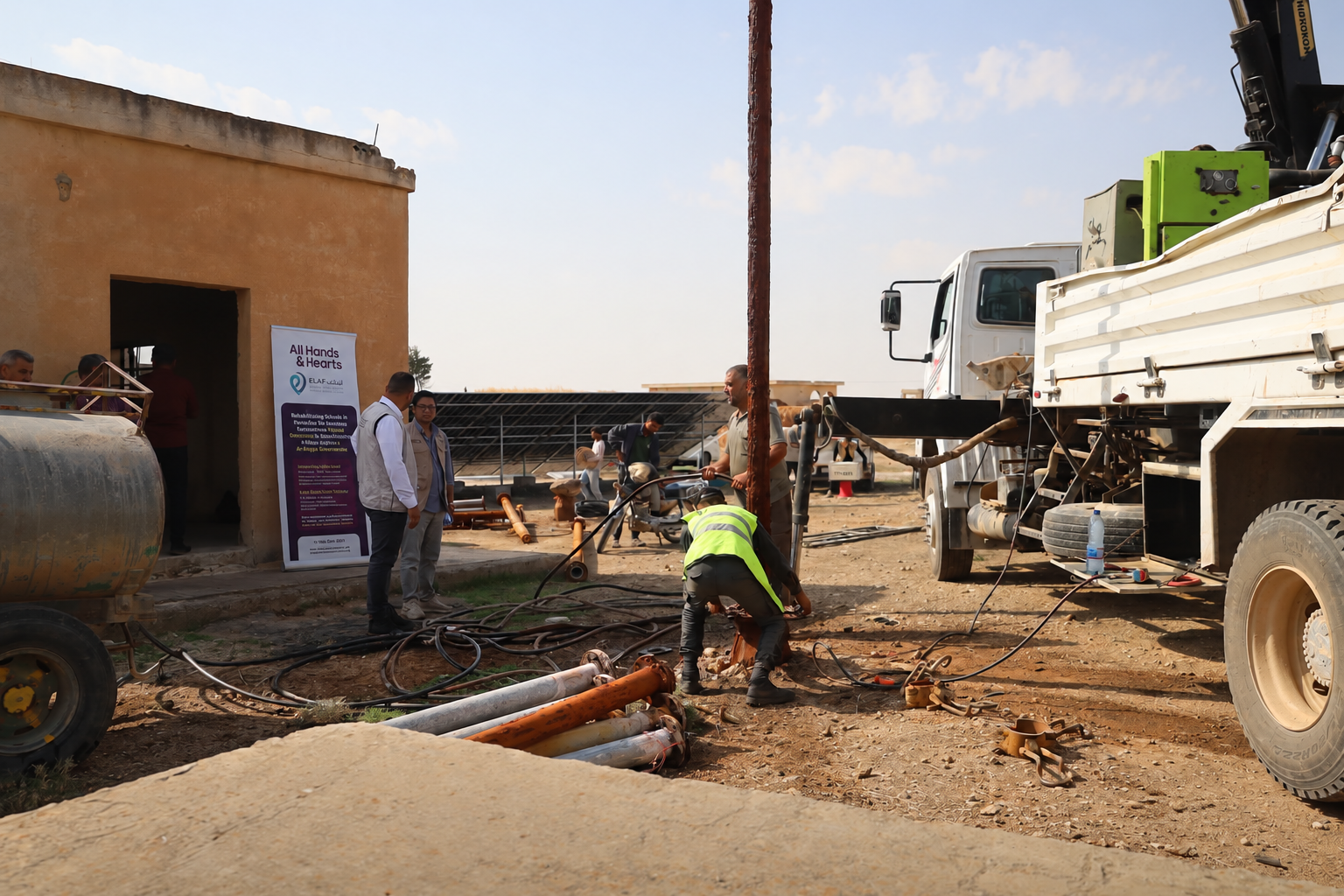
In Raqqa Governorate, key water systems need major repairs. In the village of Saleeb Al Qurran, the local water station has been offline since 2017 due to heavy physical damage to the water tank, missing electrical equipment, and broken pipes.
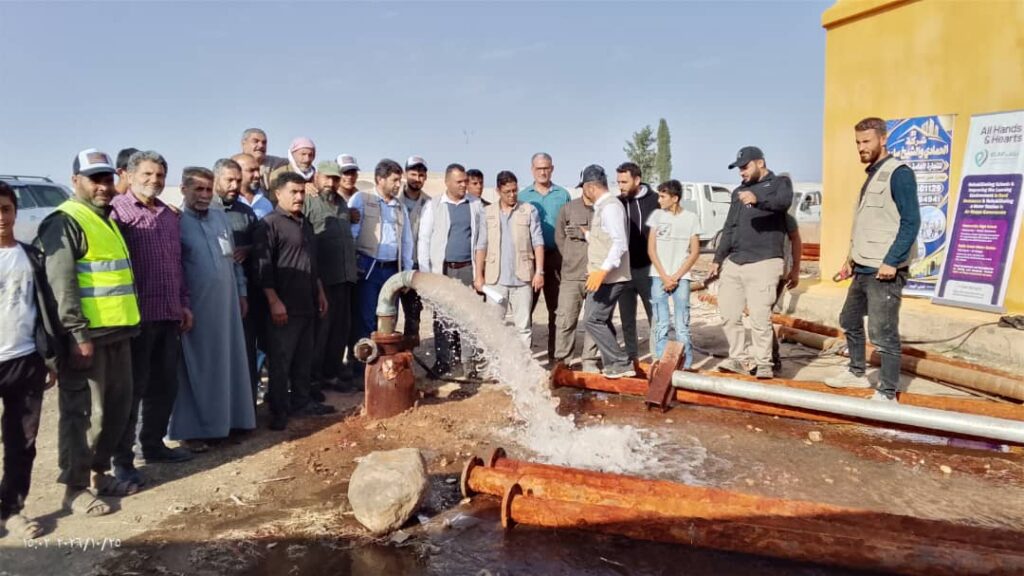
For nearly ten years, families across five local villages have had to buy water from private trucks or use untreated wells, creating a heavy daily expense for families. Repairing the station brings clean, affordable drinking water directly back to these communities.
Our Response
Restoring Essential Water Systems
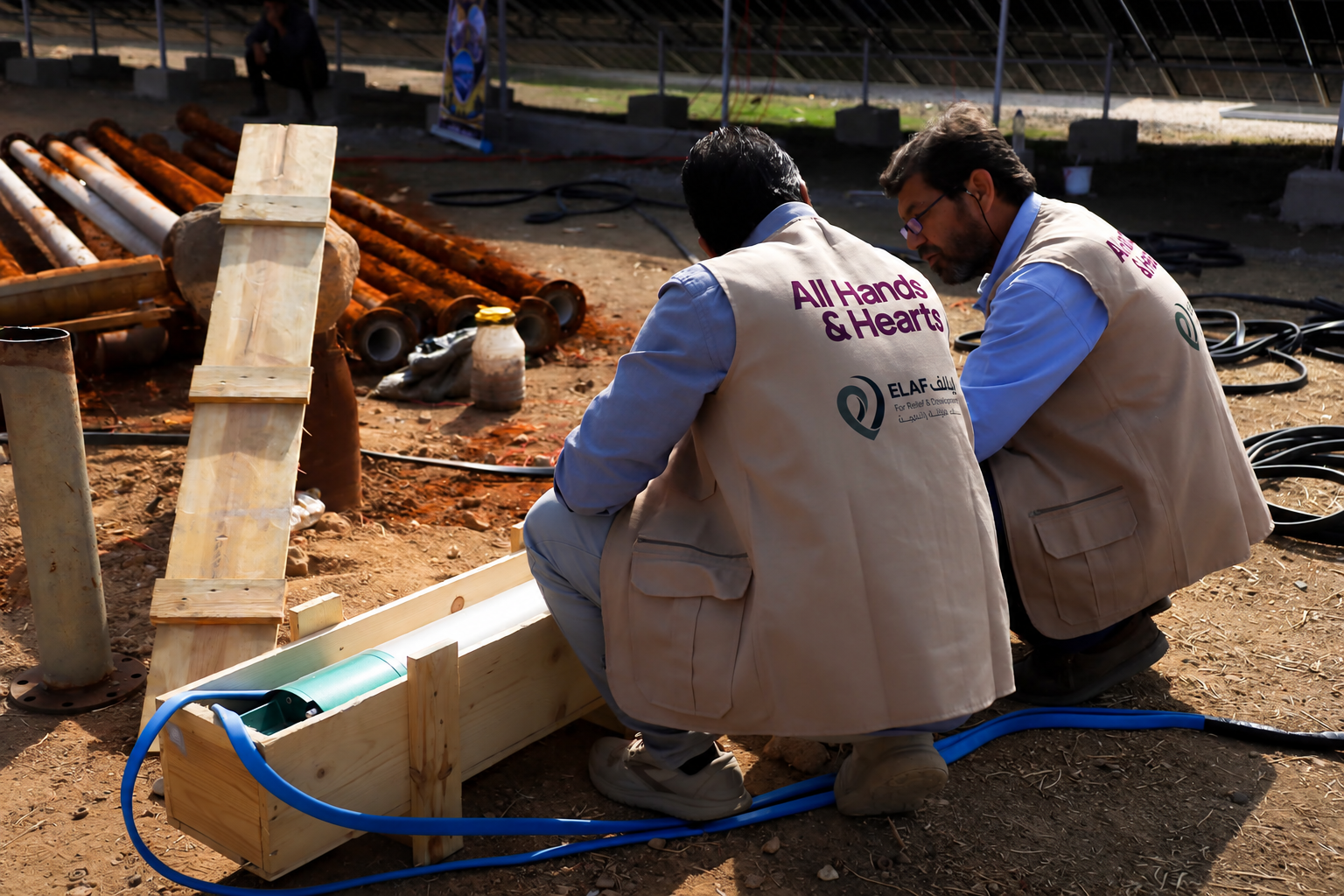
As part of this program—run alongside local partner Elaf for Relief and Development (Elaf RD)—we are repairing the water station in Saleeb Al Qurran and carrying out WASH/electrical restoration at a secondary school in Rural Damascus.
Our team is focused on practical, long-term repairs:
- Fixing Key Equipment: Checking and repairing the two existing water wells, repairing the concrete storage tank, and fixing broken pipes in the local distribution network.
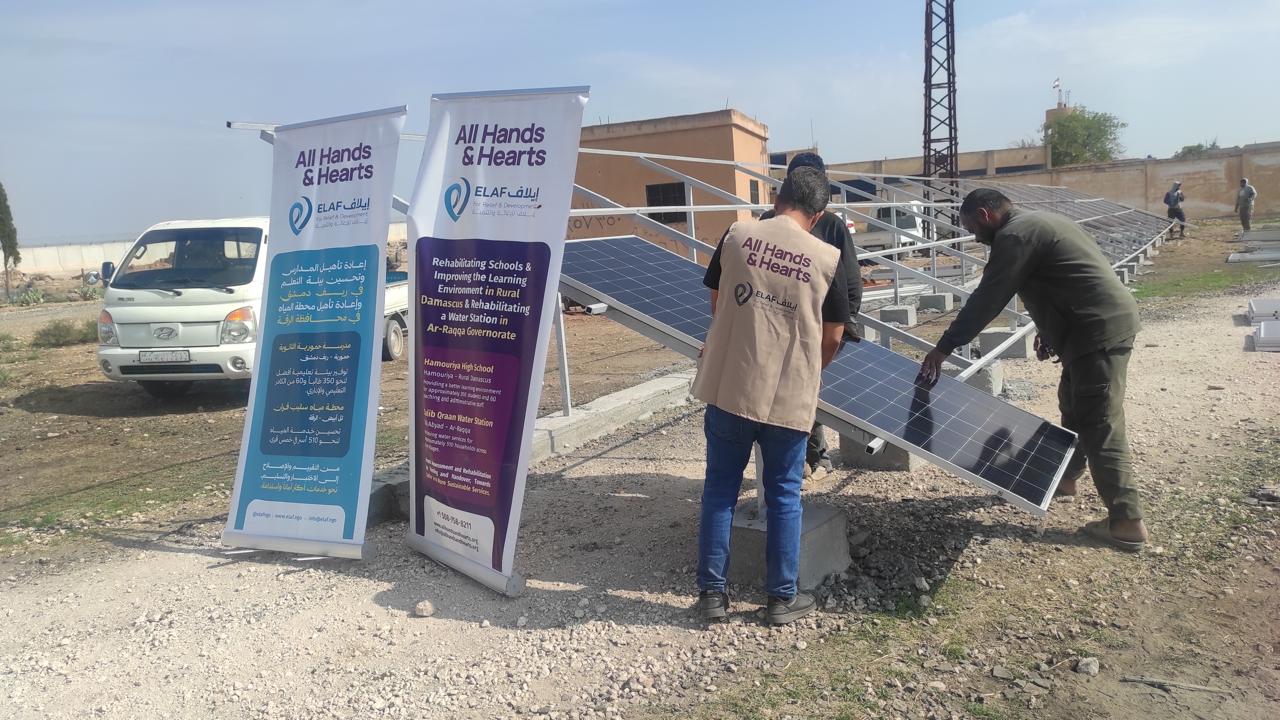
- Adding Solar Power: Installing solar panels so the pumps can run reliably without needing expensive fuel or relying on an unstable power grid.
- Testing Water Safety: Testing the water and setting up a chlorination system so all water is clean and safe to drink before handover.
- Hiring Local Workers: Working with local suppliers and hiring local technicians, builders, and metalworkers to complete the repairs.
- Handing Over to Local Operators: Turning over the station’s operation and repairs to the Raqqa Water Establishment, whose trained staff will manage the facility full-time.
Once finished, this program will bring clean drinking water to 510 households (about 3,000 people) across five villages: Saleeb Al Qurran, Bir Turki, Al-Ahmadiya, Ghazila, and Al-Sharfa. This work also helps build a clear model for future recovery projects across Syria.