The road to El Cairo takes about three hours from our base camp in Pereira. For the majority of the drive, the road winds its way uphill through the mountains of Valle del Cauca as the city slowly disappears behind you. The road narrows, the fog rolls in, and the green becomes almost overwhelming. By the time you arrive, you realize something important: this is far away.
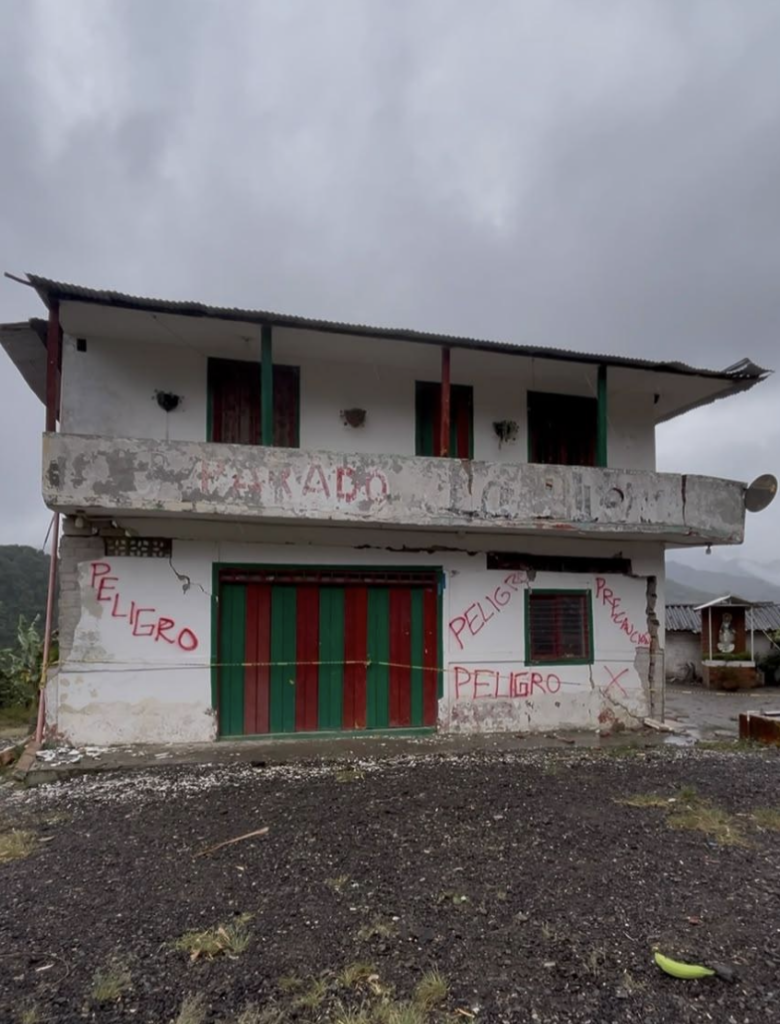
Then, somewhere along that winding road, we found our first warning. A lonely house stood on the mountainside, surrounded by green, with one word painted across its walls in enormous red letters: “PELIGRO” (Danger). It wasn’t a welcoming sign. It felt more like a warning for what was waiting ahead.
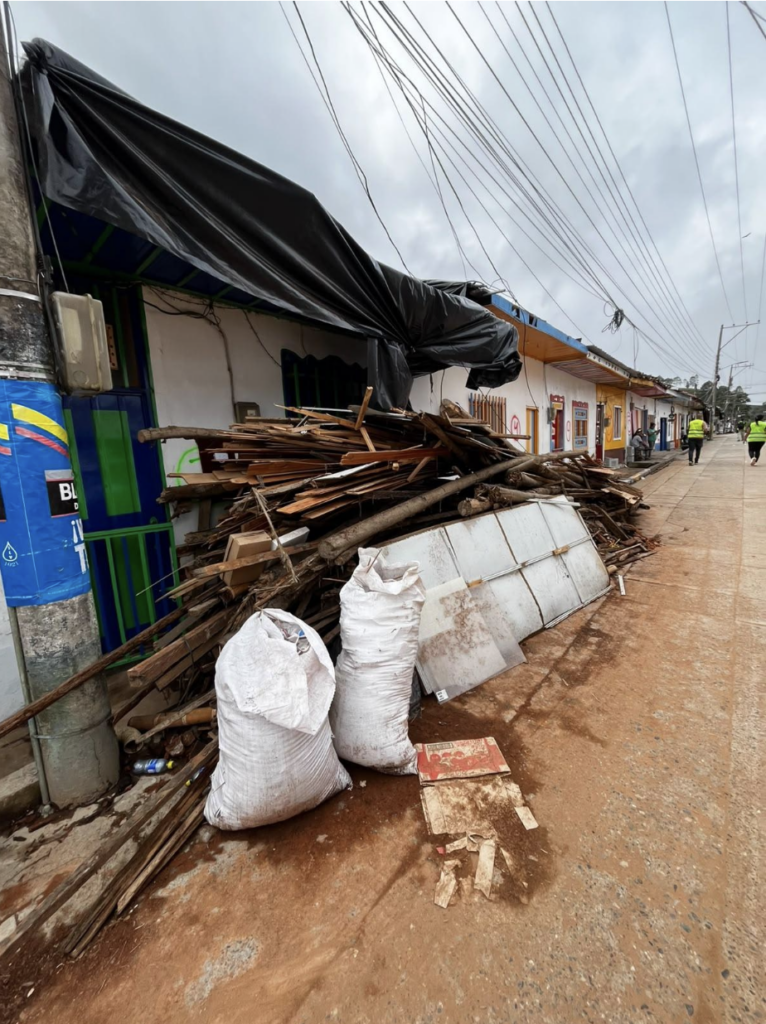
When we reached El Cairo, the signs were hard to miss: damaged houses, rubble, debris, empty spaces where parts of homes had once stood. And, strangely, loneliness. Not because there weren’t people around. There were. But almost everyone we saw seemed to be from El Cairo, helping someone else from El Cairo.
Neighbors helping neighbors. Families helping families. People putting their own hands to the work of rebuilding what the earthquake had taken from them.
El Cairo was close to the epicenter, but the destruction wasn’t uniform. Some houses still stood with their beautiful, colorful façades almost untouched. And behind those façades was another story.
Traditional construction in the region often relies on materials such as bamboo, mud, stone, and other locally available materials. What looks solid from the outside can hide serious structural damage underneath, which may be the reason why these structures stand tall to this day. That contrast stayed with me.
Beautiful Walls. Fragile Homes.
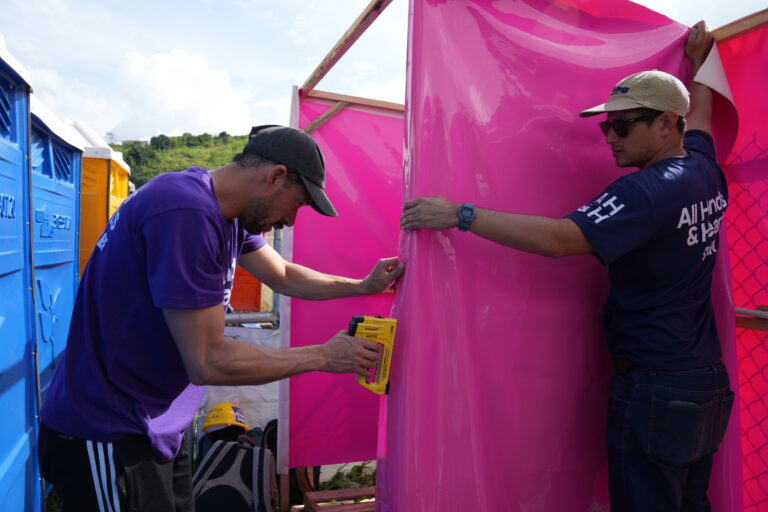
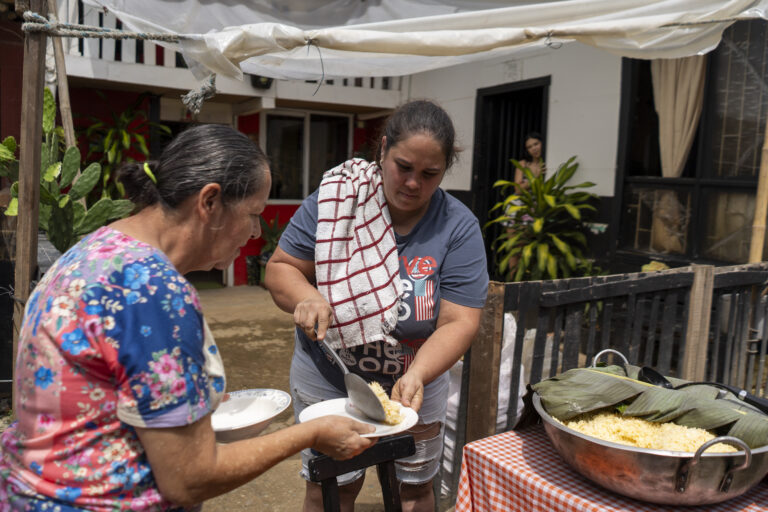
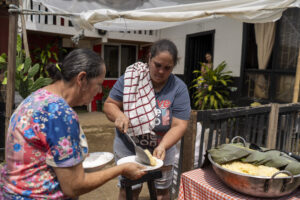
In the middle of it all, the people of El Cairo were doing what they could with what they had. During our visit, we met with local partners who have been working directly with the community, helping to stabilize damaged houses, restore electricity, establish a community food bank and kitchen, and get bathrooms functioning for a shelter housing around 120 people, including 22 children.
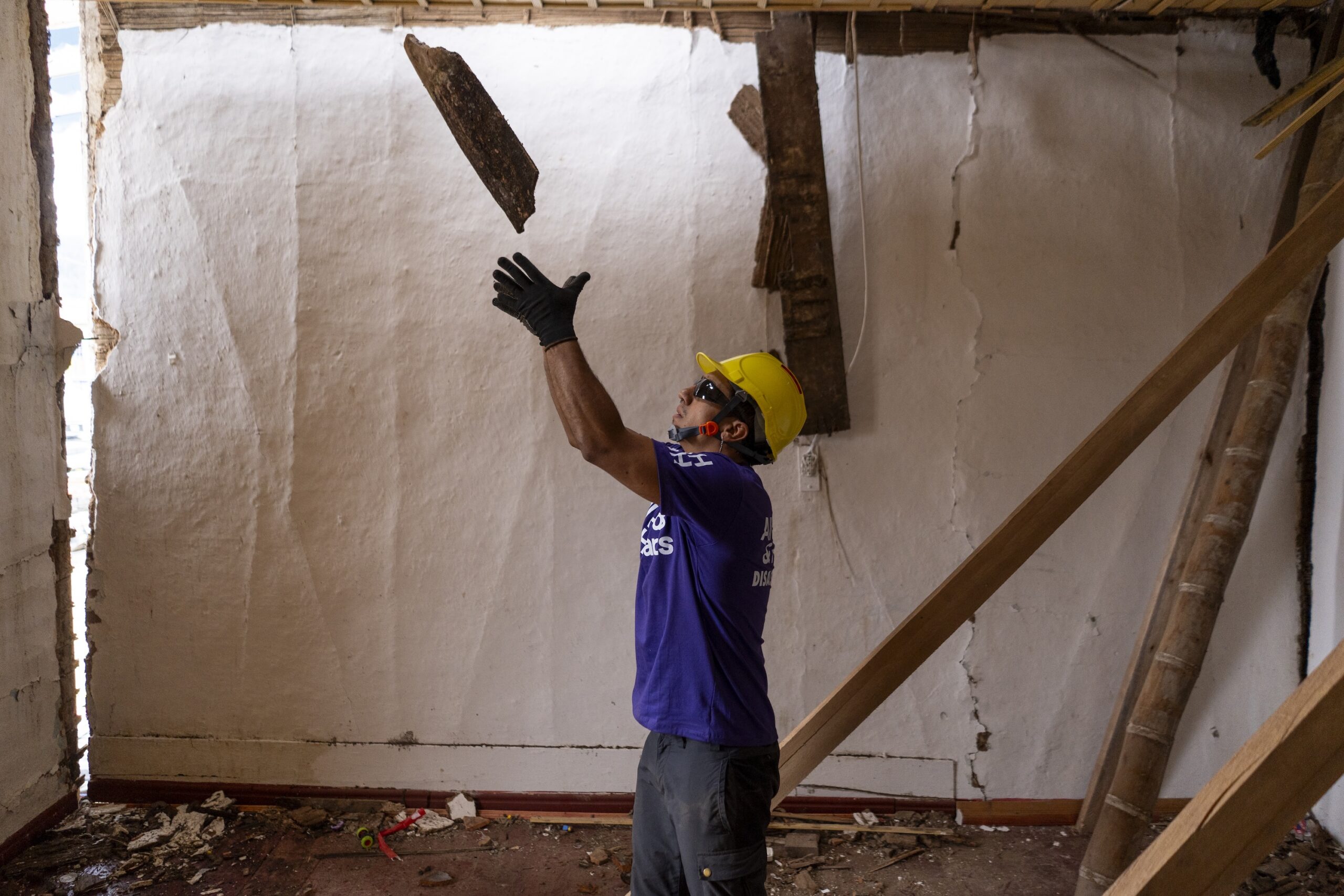
These aren’t spectacular rescue operations. There are no helicopters. No dramatic convoys. No giant machines dominating the landscape. Sometimes recovery looks like a group of people carrying materials up a hill. Sometimes it looks like fixing a bathroom. Sometimes it looks like getting electricity back into a house. Sometimes it is sharing a meal with someone who needs to be heard. And sometimes it looks like a farmer helping his neighbor rebuild a wall.
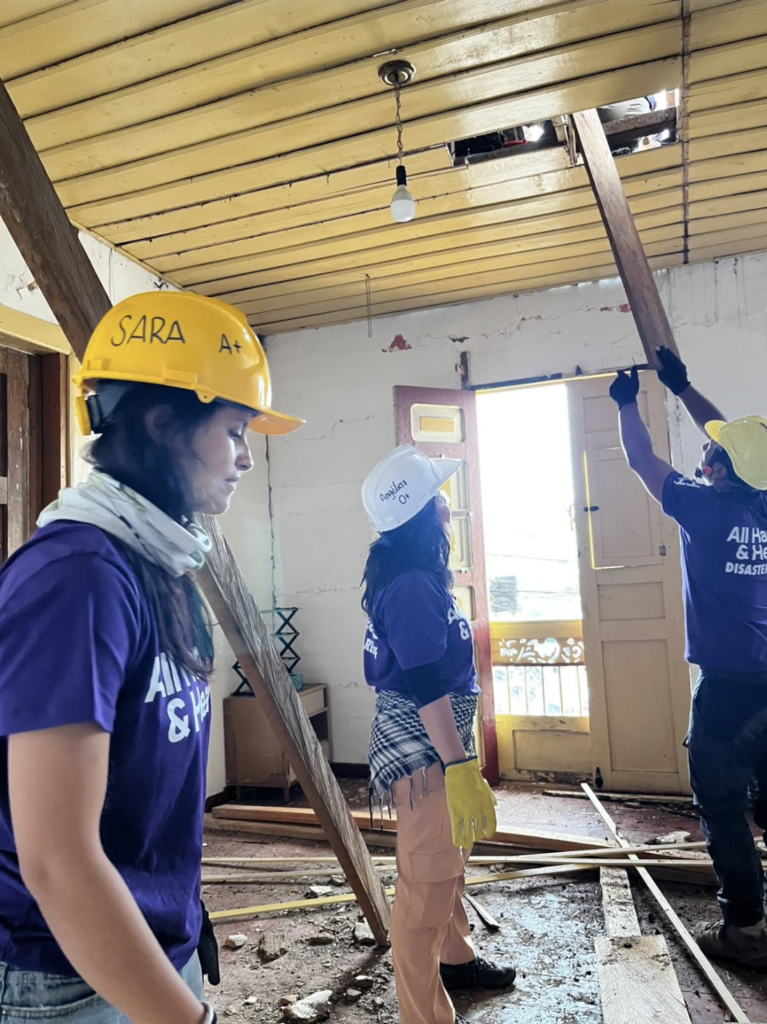
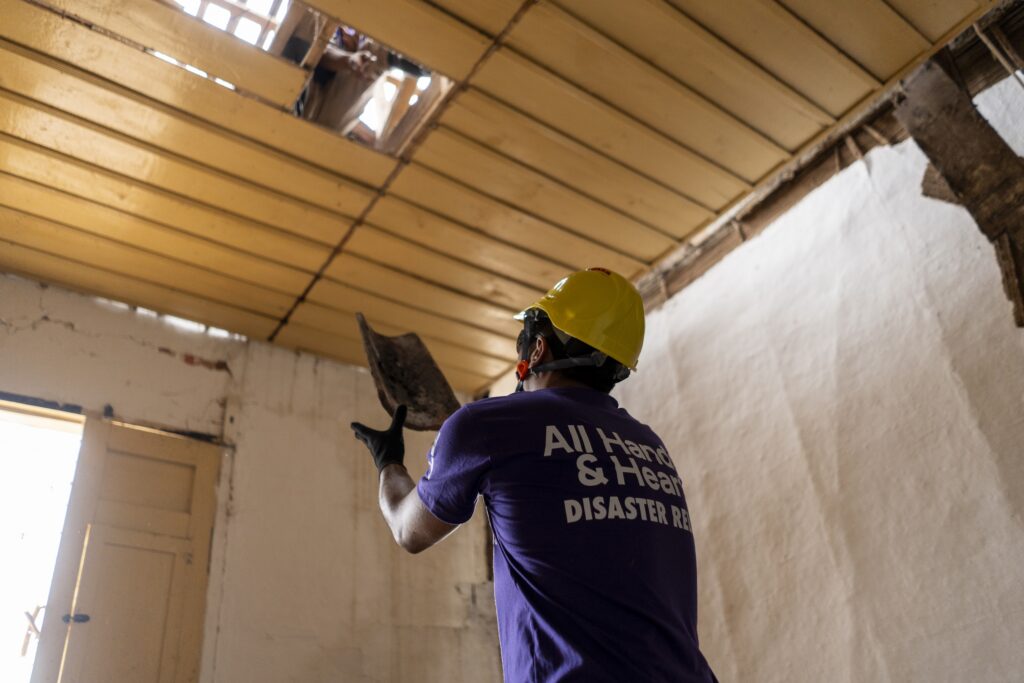
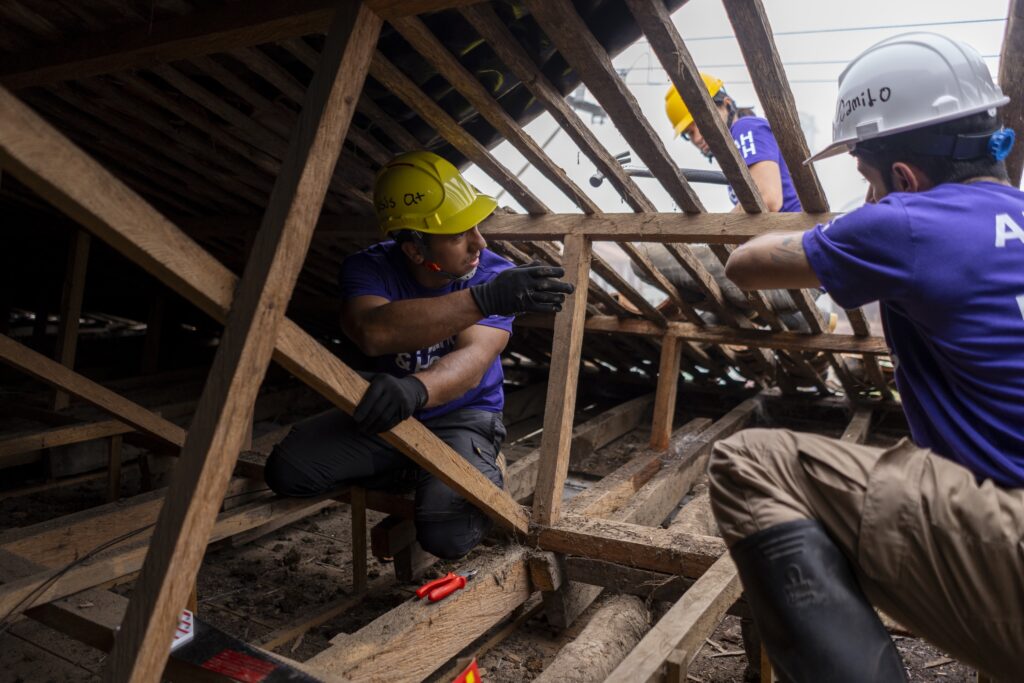
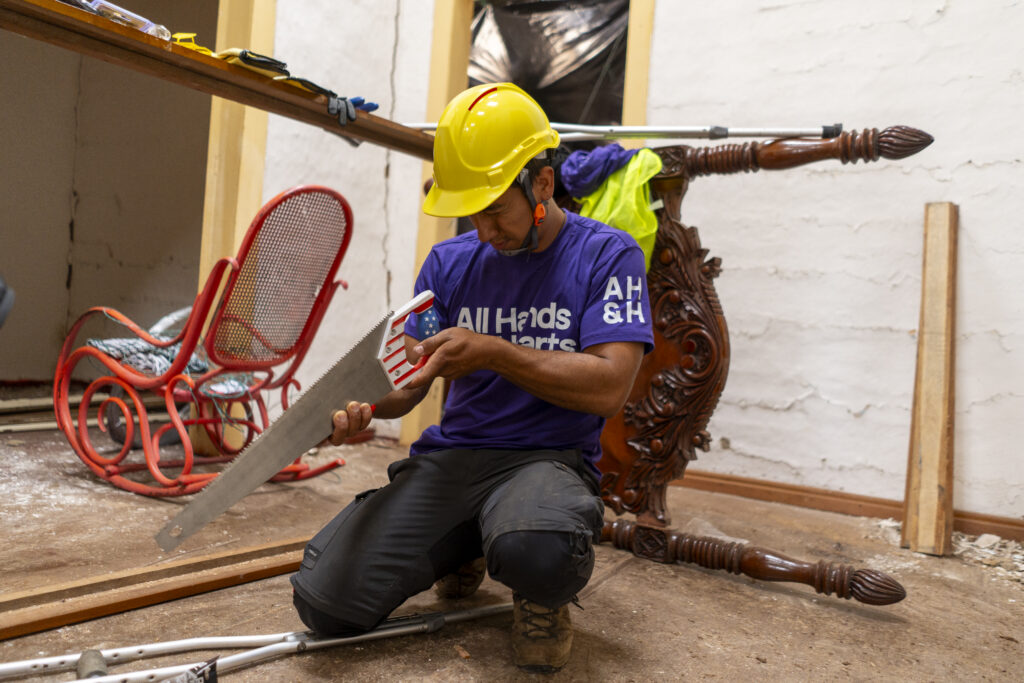
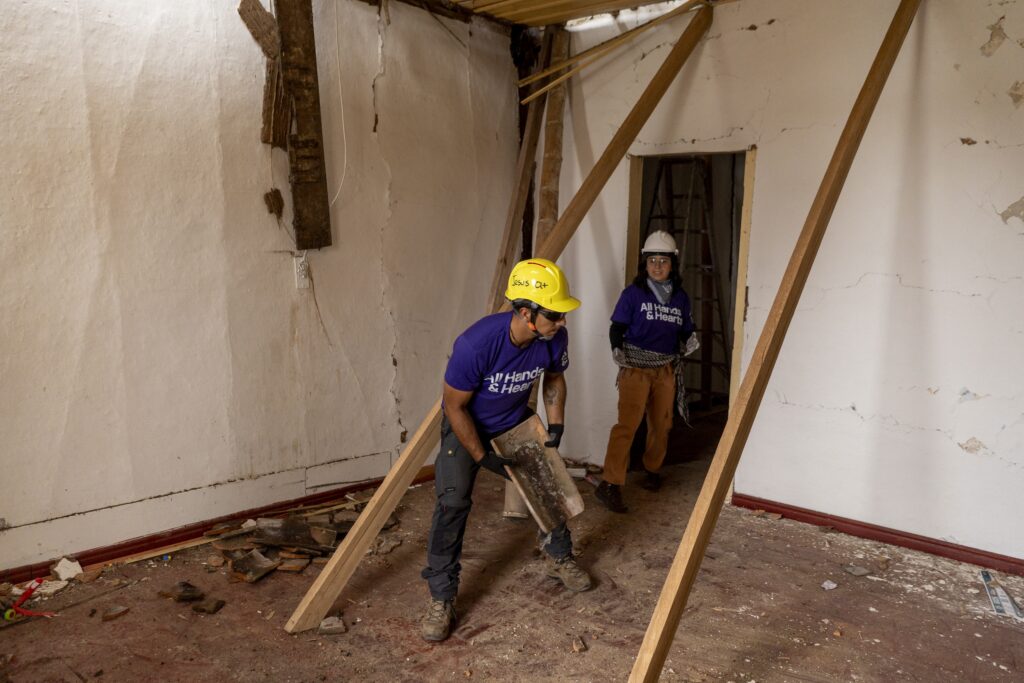
One of the things that struck us most was the importance of the local agricultural community. A local farmers’ organization was playing a central role in one of the food banks in town, becoming an important part of the network supporting people in the area. This is what disaster response can look like when you get far enough away from the headlines.
People Helping People
El Cairo doesn’t need to be presented as a place without hope. Quite the opposite. There is damage here, certainly. There is uncertainty. There is a long road ahead. But there is also an incredible amount of knowledge, cooperation, and determination already present in the community. The earthquake may have broken houses, but it hasn’t broken the people living in them. And perhaps the most important thing we can do from outside is not arrive believing we know how to save them. It’s to listen, support the people already doing the work, and make sure the rest of the world doesn’t forget they are still here.
At the end of the day, El Cairo is a UNESCO World Heritage site for a reason. El Cairo is still standing. And now, it has to be rebuilt – stay with us!
Make a Difference
The need is growing. Your support allows us to continue showing up by working alongside communities, supporting local efforts, and doing everything we can in the coming weeks to help families recover.
Thank you for your support.