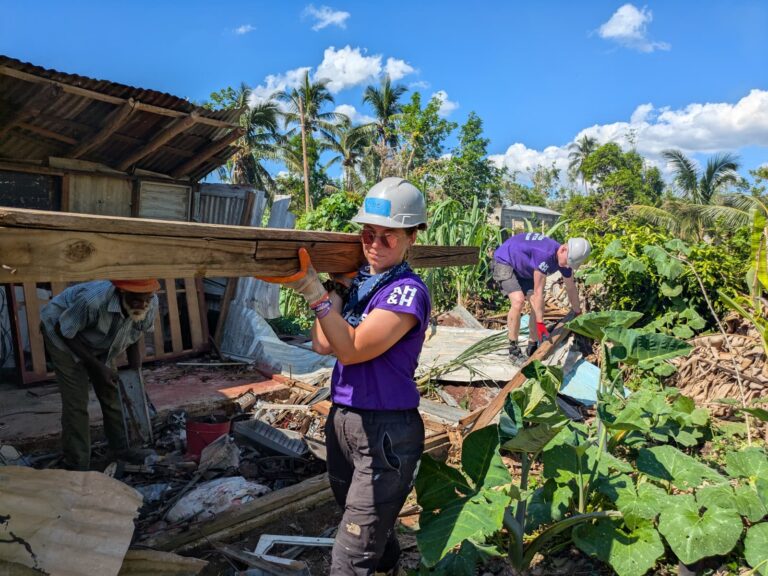
When a disaster strikes, All Hands & Hearts mobilizes immediately to figure out how we can help. But what does that really mean? How do we decide where to go and how we can help most?
Step 1: Prepositioning
Patrick explains the first step is what’s called prepositioning. To respond to Hurricane Isais, the team landed in Atlanta, GA, but quickly determined they needed to head to Pensacola, FL, the best place to establish a safe base.
“The first thing you’re looking at is access—where can we get to that has power and water? We want to be safe. We want to make sure that we have a place to operate out of, and that we’re not causing more danger and harm by being there,” he said.
Step 2: Establish A Base And Start Working With The Community
Once they’ve determined where they can safely go, the team’s next step is to start figuring out where the damage is most severe. For Hurricane Isais, it quickly became apparent that the counties where it made landfall would be a good place to start.
AH&H arrived in Pensacola with three vehicles, and one went ahead to assess road conditions. Behind it, a box truck carrying supplies and a third vehicle followed.
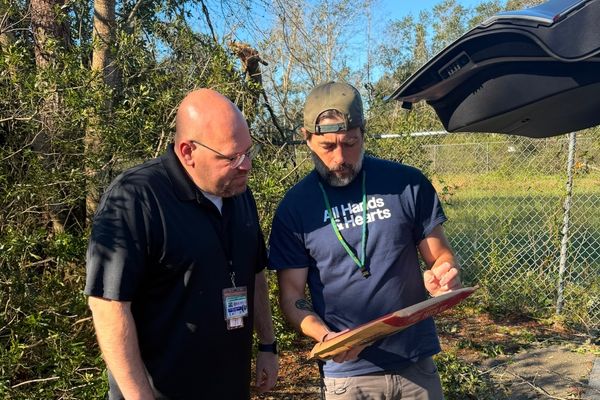
That advance vehicle is also the one that starts making contact with the local community, talking to people they see along the way, and beginning to map out needs.
Step 3: Coordinate With Other Organizations
Early on, Patrick and other AH&H staff start joining VOAD calls (Voluntary Organizations Active in Disaster) and meeting with local emergency management authorities. “You want to meet a lot of partner organizations to understand what they’re doing and what they’re seeing,” he explained.
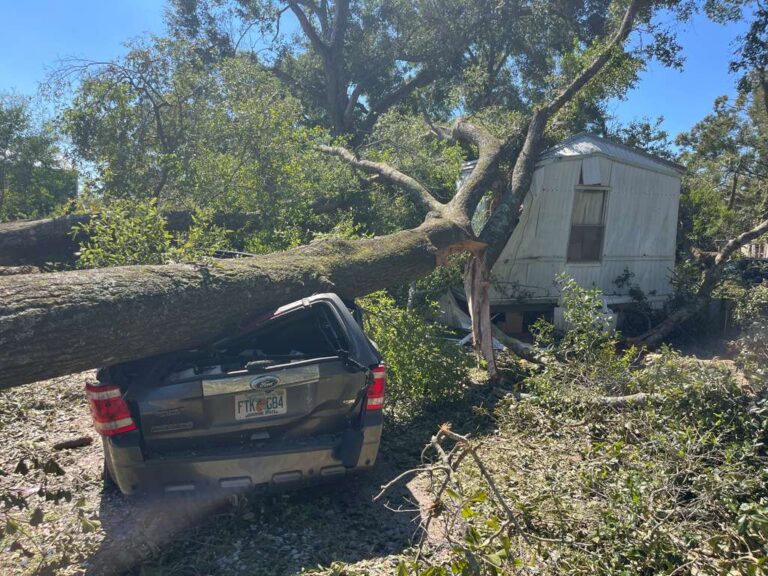
Easily accessible areas, for example, other organizations might serve quickly. In contrast, the AH&H team learned one community about 40 minutes north of Pensacola had extensive tree damage, no power and, for a time, no water.
“In those early days, these people are often the ones that not only have the least amount of assistance, but it’s oftentimes the most needed,” Patrick said.
Step 4: Listen To People’s Needs
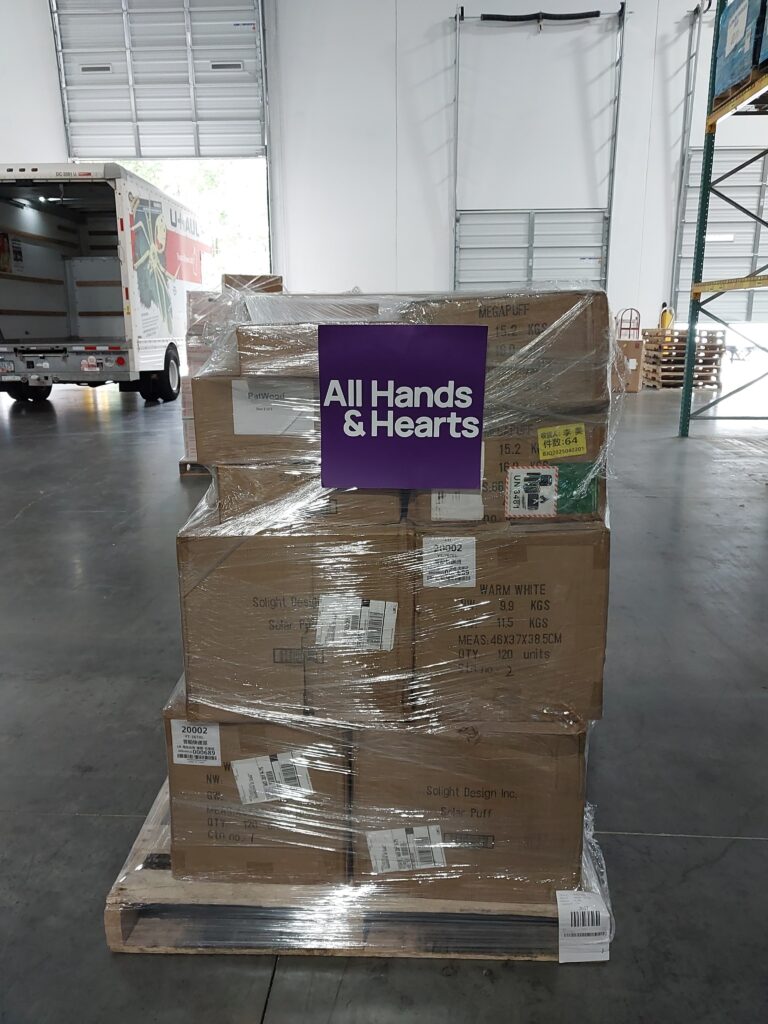
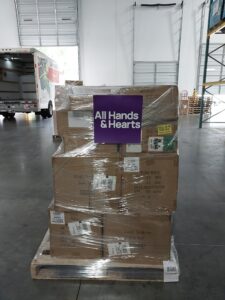
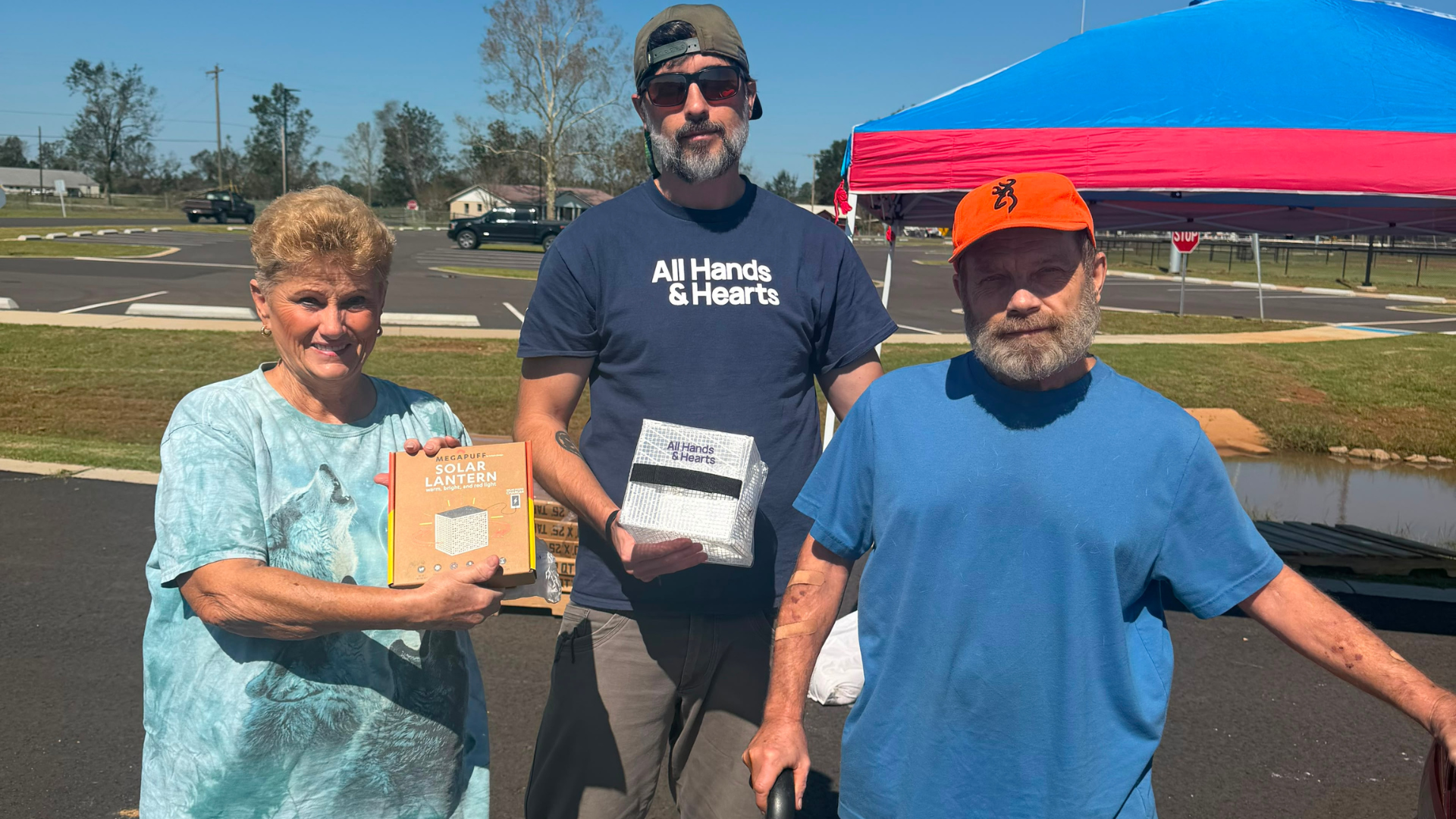
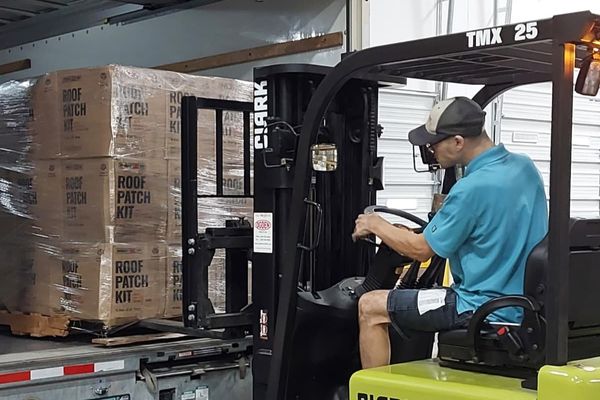
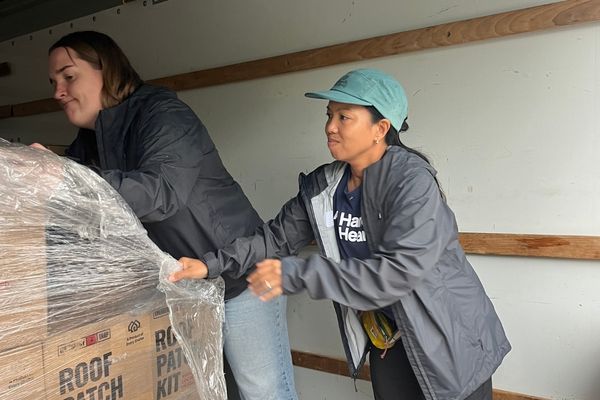
One of the most important parts of a response is squaring what we can provide with people’s actual needs. The team arrived in Florida with a box truck full of solar lights, roof tarp kits, and hygiene kits.
“We’re trying to get an idea of where these items are most useful,” Patrick said. “Every community is affected in a different way. So it’s not just saying where there is the most need, but where there is the most need for these types of items. It’s like peeling back layers of an onion.”
It’s also important to remember that people in the communities where we deploy have been through something terrible. Our job is to meet them where they are—sometimes, giving them space to be themselves is one of the best ways to help.
“They’ve lost homes, livelihoods, sometimes family members, right?” Patrick said. “They do have a lot of need, but they have dignity and respect, and they need to be treated that way.”
Support Hurricane Isaias Relief Efforts
When disaster strikes, every second counts. Your support enables our response teams to deploy rapidly, reach isolated communities, and deliver immediate relief where it’s needed most.
Thank you for your support.